
When the Work Answers Back
One of the clearest answers came as a "no thank you."
A boy in the Conscious Sculpture Art Club told me the sessions were not for him. He did not want to relax or close his eyes, choosing another after-school activity instead. We began with nine children; he left, another child joined in his place, and we stayed at nine.
I could have treated his departure as something going wrong. Instead, it became an essential lesson of the pilot: not everyone finds calm through stillness, and not everyone wants to travel inward with their eyes closed. An invitation must always leave room for no.
Conscious Sculpture asks what happens when we treat attention, imagination, and intention as artistic materials. I walked into the pilot expecting to adapt and refine the tools based on how the children responded. What I didn't envision was how they would start co-creating them, taking a simple tool like the Sun Breath and expanding it with their own ideas because it had already become theirs.
From idea to encounter
Conscious Sculpture grew while I was reworking the Art as Activism Toolkit into the Peace Movement Remix. Originally, I was looking for a way to connect social change with inner awareness, without suggesting that breathing quietly could solve structural injustice.
The first taster sessions took place during Peace Week at St Mary's CE Primary School in Moss Side in July 2025, where around 60 Year 6 children explored breathing, guided imagination, art, and movement over four sessions. In 2026, supported by the Moss Side Youth Fund, I returned for a longer pilot featuring a weekly Art Club, staff training, a wider school breathing practice, and a day of Energy Actions combining movement and creative play.
I entered with five Conscious Sculpture tools: Ocean of Love, Peace Zones, Heart Radiance, Light Architecture, and Meta Sculpture. While I knew I would be tweaking them along the way, the shift was realizing that the tools needed to learn how to understand the children just as much as the children were learning them.
Stillness is not neutral
Some of the children who completed the halfway survey could close their eyes and follow a guided journey easily. Others could only do so sometimes, while a few remained watchful or restless.
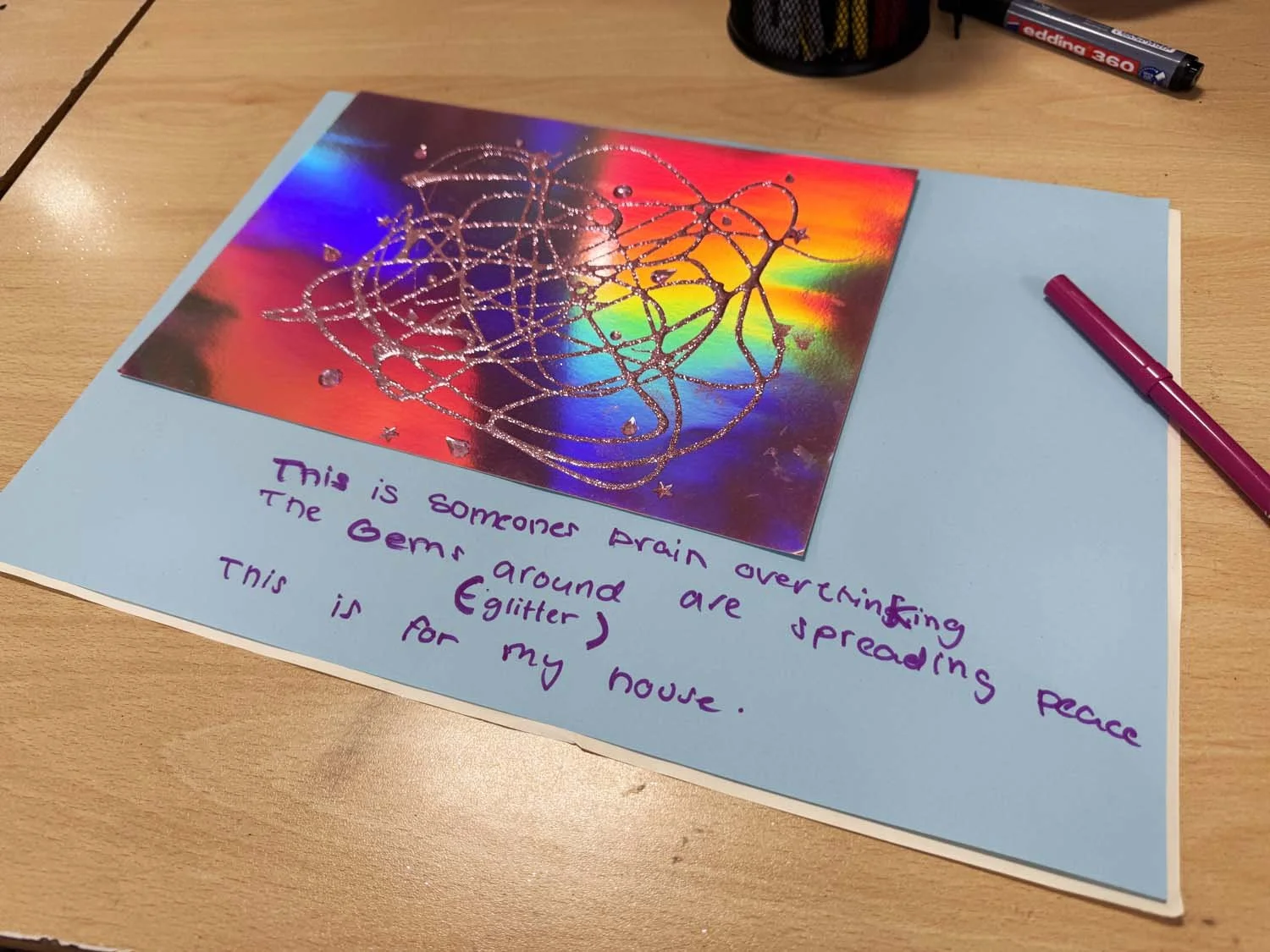
One child who struggled with visualisation found her own way in through drawing. With her eyes open and her hands occupied, she created detailed peace zones on paper, a distinction that matters, because it proved the practice hadn't failed; it had simply changed form.
We often present calm as if it has one universal shape: a quiet body, closed eyes, slow breathing. But stillness can feel uncomfortable, exposing, or simply boring. Movement can regulate one person while overwhelming another, and even gentle practices carry assumptions about what participation should look like.
Inner work requires genuine agency. A child should be able to draw, move, watch, adapt, or refuse. If Conscious Sculpture is going to remain alive, it cannot become a fixed set of instructions imposed in the name of wellbeing; it must make space for different nervous systems and ways of knowing.
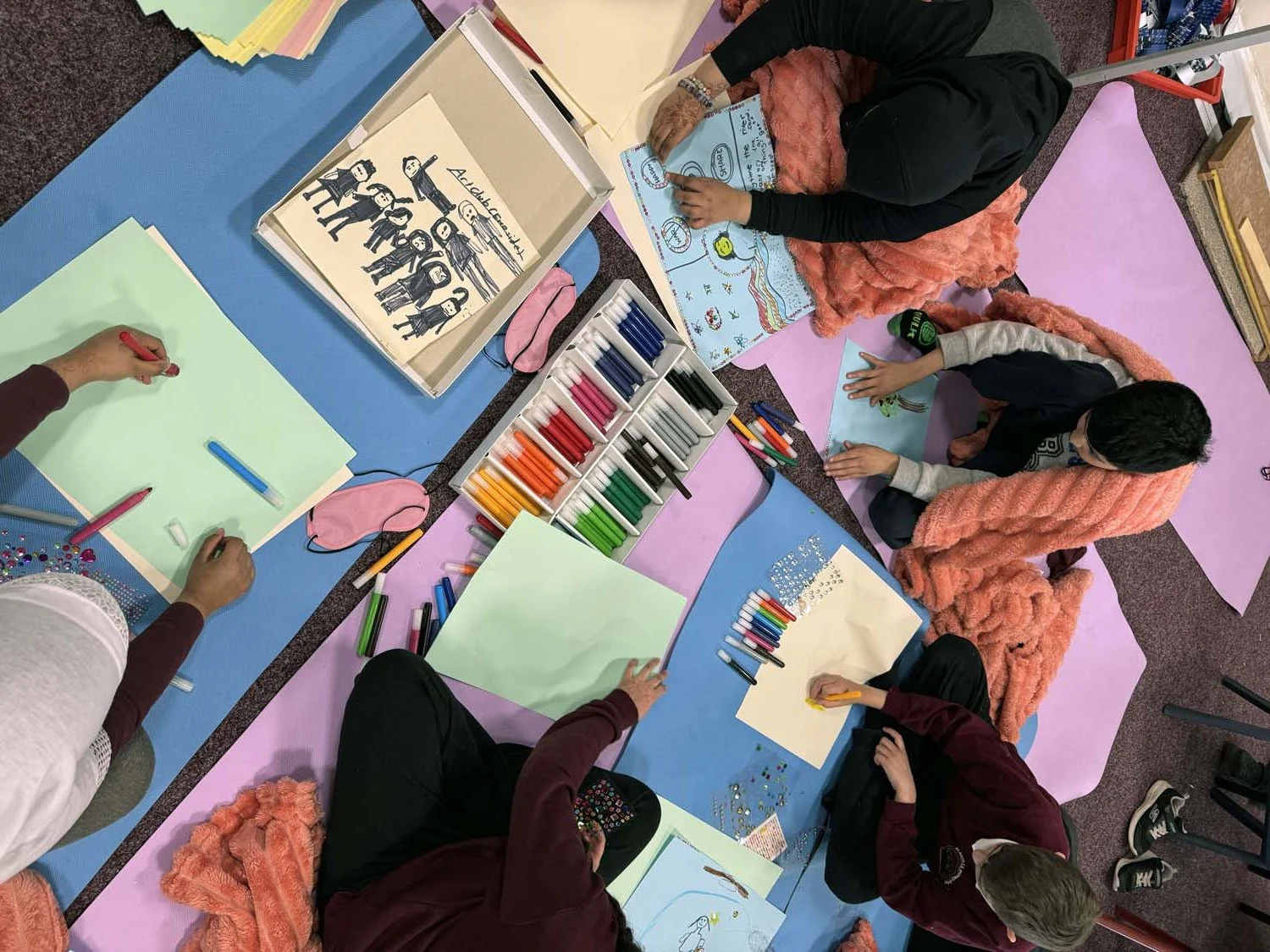
This is also where the Peace Movement Remix part of the project's name earns its place. I talked with the children about a simple idea: that peace in the world has to start somewhere, and that somewhere is us. If we move through a day carrying anger, sadness or worry, that is what we offer to the people around us, whether we mean to or not. How we feel is not private. It reaches other people. So, the internal work was never really about producing calm children. It was about giving them a practice for noticing what they are carrying, and some choice in what they pass on.
The Sun Breath
The practice that travelled most easily was also one of the simplest.
An adaptation of the Heart Radiance tool, the Sun Breath begins by bringing attention to the heart area and imagining a warm inner sun. The breath and light move outward, accessible whether standing or seated, with eyes open or closed, and through slow and large movements.
Because the children were actually using the practice, they began bringing their own elements into it. In the Energy Actions survey, two Art Club members offered direct, practical evolution: one suggested linking arms after three breaths to form a giant sun, while another suggested using it to frame every session from start to finish.
At the halfway point, several children said they had used something from the sessions at home, and one told me directly that she practised the Sun Breath there. During moments of self-doubt while delivering the pilot, that small piece of evidence interrupted the critical story I was telling myself. Something had travelled beyond the room, not a full framework or a measurable transformation, but one practice carried home because it felt useful to her.
For now, that is enough.
When movement becomes mayhem
Energy Actions brought Conscious Sculpture into the body through dancing, animal movement, fabric, feathers, sound, and shared play. The energy filled the space, and collaborating with a dance practitioner was undoubtedly the right decision.
Yet freedom was not automatically liberating for everyone. At times, wild movement tipped into noise and chaos; some children occupied the centre while others retreated to the edges. Requests for more breaks, water, and calmer sections quickly surfaced in the feedback.
This didn't mean the movement failed, but rather that freedom required a firmer container. The ongoing tension is learning how to construct enough structure for children to feel safe without controlling the natural life out of the experience.
The framework had to move
I initially introduced all five Conscious Sculpture tools together, assuming they would form a natural unit. They didn't.
Some ideas landed immediately, while others were remembered as words without being deeply embodied. Light Architecture, in particular, wasn't given a fair test. I placed it alongside four unfamiliar concepts at the start and didn't return to it. The issue wasn't the tool itself, but the velocity.
The next version will establish a familiar opening sequence: Ocean of Love, Heart Radiance, and a Peace Zone, before dedicating individual sessions to single tools in depth. Light Architecture might require a darkened room with actual beams of light moving through the space, while Meta Sculpture needs room for children to experience how intention changes physical making, rather than being told what it means.
The children didn't just give feedback on the framework I made; they made it impossible for the framework to remain static.
Alongside the school
While this was unfolding at St Mary's, I was running a parallel experiment of my own, gathering a small constellation of AI collaborators into a working studio housed inside an Obsidian vault. It didn't enter the classroom or touch the children's work directly, but it asked a related question through different materials: what happens when a digital structure is treated as sculptural material? That question, and what came of it, is its own story for another post.
Not proof, but contact
The pilot was not proof that Conscious Sculpture "works." It was the first time the work answered back.
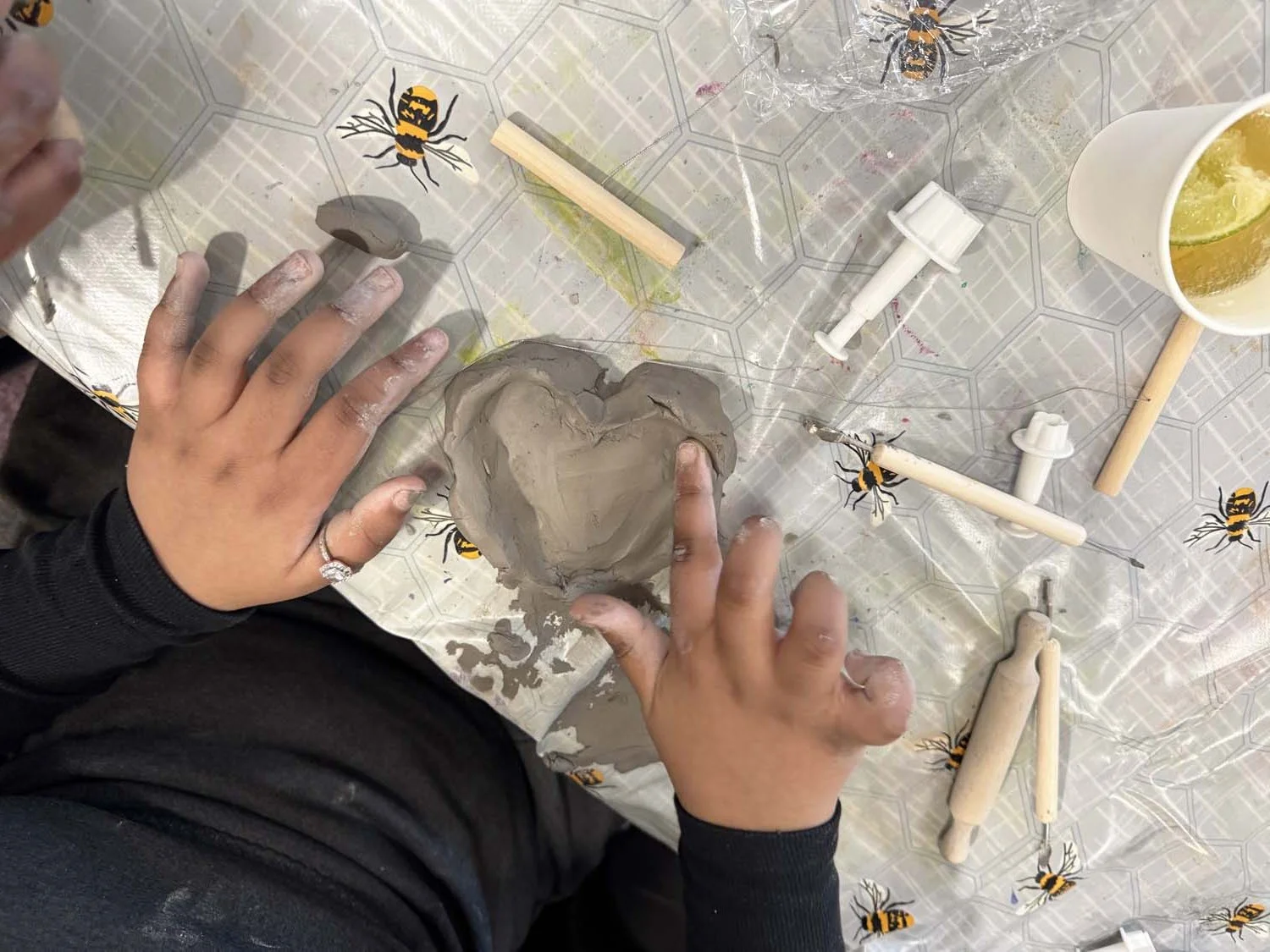
It answered through the boy who opted out, through the child drawing with her eyes open, through chaotic dancing, through requests for clay and fruit, and through the Sun Breath quietly finding a place in someone's home.
The Art as Activism Toolkit is resting while I follow what this newer practice demands. The next phase will involve reviewing and reshaping these tools before exploring how Conscious Sculpture operates with adults in community, cultural, and creative-health settings.
Underneath all of it sits the other half of what I was asking the children to consider: that imagination is not decoration. It is the birthplace of almost everything we have, every invention, every kindness, every way out of a hard problem that didn't exist until someone pictured it first. If these children are going to inherit a harder world than the one I grew up in, they will need that capacity on purpose, as leaders, visionaries, creatives and the people who build what comes next. Conscious Sculpture is a small, early attempt to keep that part of them awake.
This is what a pilot is really for: not proving an idea was right from the start, but allowing reality to enter it and letting the work become capable of meeting people where they are, and listening carefully when the answer is no.